Shin-Nagata, Kobe: Art, Memory, and Creative Energy
- Cultural Tours
- 190
The first time I visited Shin-Nagata, it felt like a “homecoming,” which is a bit odd since I’m originally from London in the UK. I suspect it has something to do with the mixed roots nature of the place. There’s also a “downtown” atmosphere in Shin-Nagata that you find in parts of Osaka (Higashi Yodogawa for example). Life is a bit slower than other parts of the city. People come and go on bicycles, take the time to chat, and its full of tiny shops dotted around arcades and winding backstreets. In this post, I want to go over a bit of the history of Shin-Nagata and point out some interesting cultural spots that speak to its vibrant character and appeal.
Post-war development
Shin-Nagata sits inside Kobe’s Nagata Ward, an area long shaped by hands-on making and by the people who moved in to do it. After the war, Nagata became nationally known for kemi-kutsu (“chemical shoes”), footwear made with synthetic materials like vinyl, an industry that was devised locally in the early 1950s when materials were scarce, and then grew into a major production hub clustered in Nagata and neighboring Suma. That workshop-to-factory ecosystem didn’t appear out of nowhere: the area already had a base of rubber and footwear-related manufacturing, and the chemical-shoe boom built on those skills, networks, and small-scale production patterns.
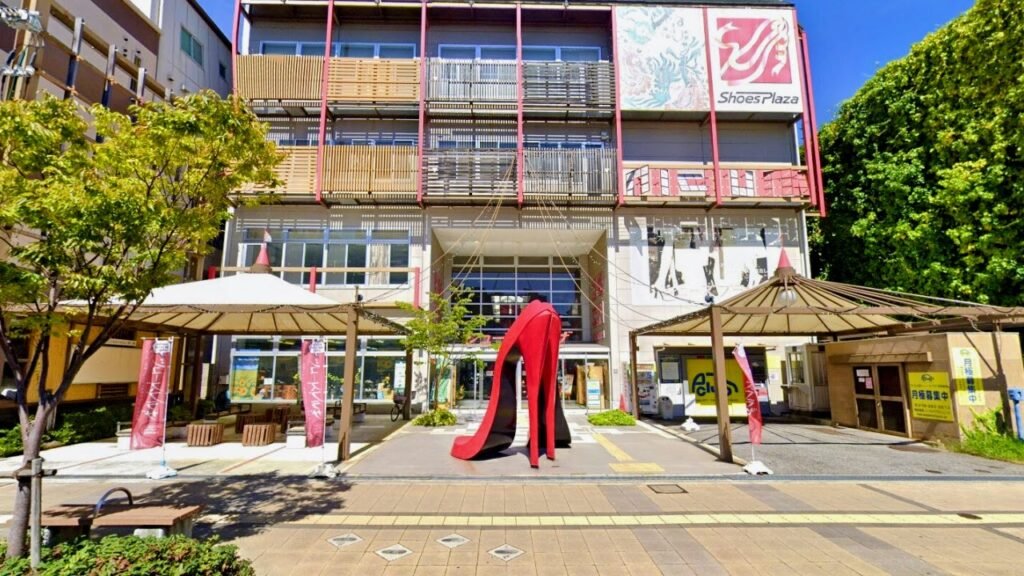
That same industrial landscape also intersects with Shin-Nagata’s migrant and minority communities. Nagata has long had a significant Korean community, and community accounts of the post–Hanshin-Awaji Earthquake period describe how Korean-language broadcasting emerged near JR Shin-Nagata to reach first-generation residents more effectively. The shoe industry is part of that story too: local histories note that many chemical-shoe businesses were owned and operated by Koreans, while many Vietnamese residents—some arriving as refugees in the 1970s—worked in those factories and lived nearby in lower-income housing, leaving them especially vulnerable when the earthquake disrupted both homes and jobs.
These layers of manufacturing, migration, mutual aid, and rebuilding help explain why Shin-Nagata is a neighborhood where the everyday task of making (and remaking) community has been central for generations.
A neighborhood shaped by resilience
Nagata Ward was one of the areas hardest hit in Kobe during the Great Hanshin-Awaji Earthquake (January 17, 1995), not only from building collapse but also from the large post-quake fires that spread through dense wooden neighborhoods, leaving deep physical and social damage in the ward. In the years that followed, the area around Shin-Nagata Station became a major focus of reconstruction, with land readjustment and urban redevelopment projects used to rebuild infrastructure, housing, commercial space, and public facilities as part of Kobe’s broader earthquake recovery strategy, essentially turning Shin-Nagata into a symbol of post-disaster renewal in western Kobe.
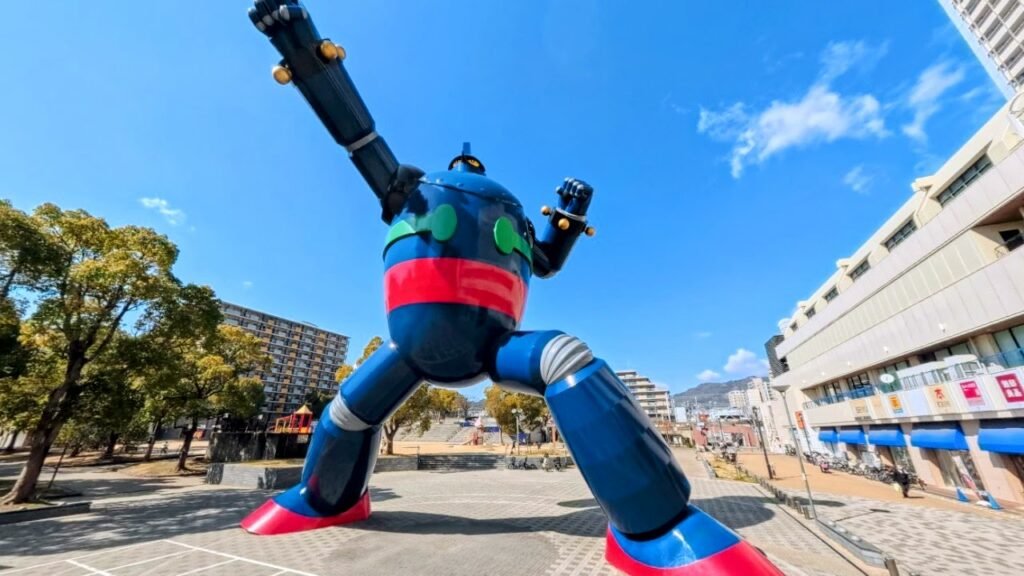
The neighborhood you see today carries that history in both visible and subtle ways: in its rebuilt streetscapes, in the public spaces around the station, and in the feeling that community here is not an abstract idea but something actively maintained. Perhaps the most visible symbol of this resilience is the Testujin statue, or Tetusjin 28 Gigantor as it is also known. Tetusjin (lit. Ironman), is a popular manga character and this much-loved monument stands at approximately 18 metres tall.
Art that lives in the neighborhood
One of the main reasons why I like going to Shin-Nagata, just to walk about, is for the notable presence of art and crafts dotted in and round the community. I like the fact that art doesn’t always have to be behind a ticket desk, that it can sometimes just be part of the flow of people moving through a city.
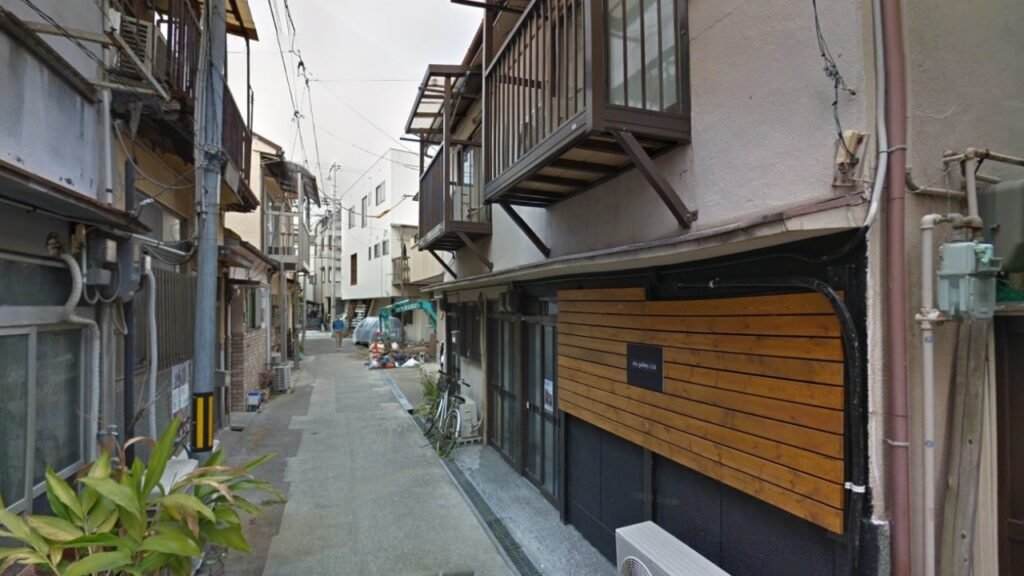
The biannual Shitamachi Art Festival helps to highlight some of Shin-Nagata’s tiny, often makeshift, artistic venues and practices. Many of the venues in the festival are people’s houses or empty buildings repurposed for art installations. Some of the venues have exhibitions all year round. For example, City Gallery 2320 hosts frequent exhibitions and creative events with local artists, and is community oriented and approachable. Similarly, JSR Job Space Rabo provides an alternative space in Komagabayashi-cho, combining artist residency, production, and presentation functions in one small site.
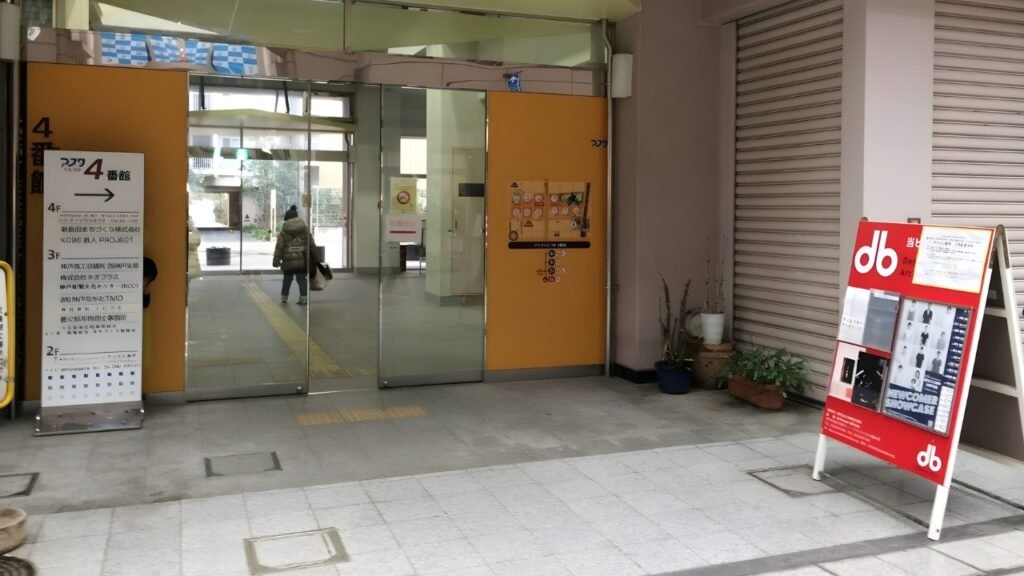
I also want to highlight NPO Dance Box, which serves at the hub for the Shitamachi Festival and is pretty much a lone pioneer in contemporary dance in Kobe. This small dance space, tucked away in a shopping arcade has produced some cutting edge work with local and overseas artists. It has been particularly active in developing an inter-Asia dance network. I also like the fact that it offers dance training/research opportunities with frequent newcomer showcases.

Another favourite spot of mine is the recently established Bookstore Roquentin, which blurs the line between reading space, cultural encounter, and neighborhood hangout. The book selection is predominantly art and film oriented, and 99% in Japanese. It also stocks some interesting small print zines and poetry collections.
Why you might visit Shin-Nagata
Let’s wrap this up shall we? What makes Shin-Nagata inspirational to me is that it invites a different kind of attention. It’s not an in-yer-face consumer spot. It invites you to wander, to linger, and to notice. Notice how public space is used. Notice how creative activity coexists with ordinary routines. Notice how the neighborhood’s history of hardship and rebuilding seems to deepen, rather than diminish, its generosity.
If you come to Kobe looking only for postcard views, you might miss what makes Shin-Nagata special. But if you’re interested in how art lives in a city, how it survives, adapts, and becomes part of everyday life, then this will be one of the most meaningful stops in your trip. It offers a version of Kobe that feels lived-in and quietly inventive.
 Art Spots Kobe is a handpicked collection of creative venues, events and activities in Kobe, Japan, curated by a long-term resident of the city. (
Leave a Reply